
Activities
Cereals, pulses, oilseed and meadows
The field crops that carry the rotation, feed the soil and keep it covered.
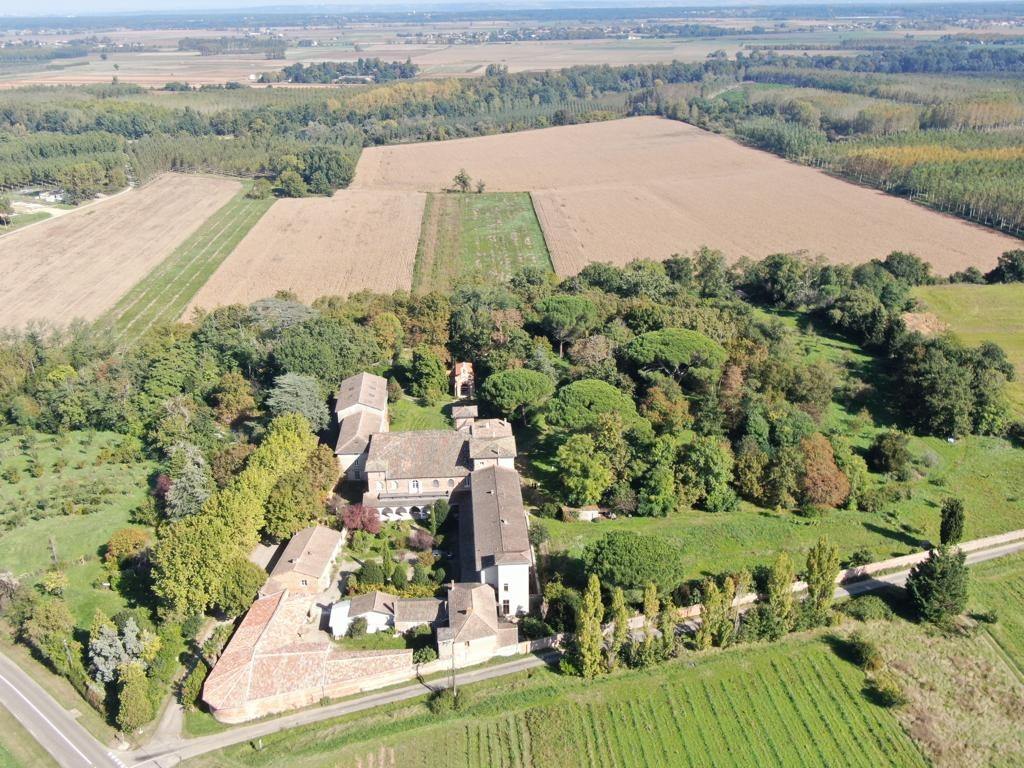
The field crops are the least visible part of this farm and the part that makes the rest possible. They occupy the open ground beyond the enclosure, they need little labour at the times when the garden and the orchard need all of it, and their real function is agronomic: they are how the soil is fed, rested and kept covered between the crops that pay.
« Otiositas inimica est animae. »
Rule of Saint Benedict, chapter 48
Idleness is the enemy of the soul.
The organic certificate names four of them individually — buckwheat, small spelt, a legume mixture and sunflower — and adds a fifth line for pasture.

Buckwheat
Buckwheat is not a cereal at all. It is a knotweed, related to sorrel and rhubarb, and the fact that it is used like a cereal is a piece of agricultural convenience that conceals how useful it is.
It goes in late, after the spring rush. It occupies the ground for around three months. It asks for no fertiliser, tolerates poor and acid soils, and — the property that matters most here — it establishes a dense canopy fast enough to shade out annual weeds without a single mechanical pass. On an organic holding, where weeding is the main cost of arable cropping, a crop whose own canopy does most of the weeding is worth growing for that reason alone.
It flowers for weeks, and it flowers in mid-summer when very little else in the landscape does. For the bee colonies that gap is the hardest part of the year, and buckwheat fills it. The honey it yields is dark and strongly flavoured.
It is also a gluten-free grain with a strong market, which in the South-West means galettes, flour and a reliable local demand.

Small spelt
Engrain, einkorn, Triticum monococcum: among the first wheats ever domesticated, grown in the Near East before bread wheat existed. It survived in marginal upland agriculture in southern France long after it had been abandoned everywhere else, and it is grown here for reasons that are not nostalgic.
- It is undemanding. Small spelt gives a modest yield on poor ground without fertiliser, which is exactly what an organic rotation can offer it.
- It is hulled, which protects the grain in store and in the field.
- It is competitive against weeds — tall, early and dense.
- It has a distinct market. Einkorn is sold as itself, at a price a commercial wheat cannot reach, to buyers who are looking for it specifically.
The trade-off is honest: yields per hectare are a fraction of modern bread wheat, and the grain must be dehulled before milling. On a farm that sells little and slowly, the exchange holds.
The pulse mixture
The certificate records this line as mélange de légumineuses — a legume mixture — and the plural is the point. A mixed stand of pulses is more robust than any single species: if one component fails to establish, or takes a disease, or is caught by drought at flowering, the others compensate and the ground still carries a crop.
Pulses do the one thing no other crop group can do. Through the bacteria in their root nodules they fix atmospheric nitrogen and leave part of it in the soil. On a farm with no access to synthetic fertiliser, that is not a bonus; it is the nitrogen supply. Every cereal crop on this holding is preceded, sooner or later, by a legume that paid for it.
They also break disease cycles, being unrelated to the cereals they alternate with, and they are harvested as a dried pulse for human food — a crop, not only a green manure.
Sunflower
Sunflower is the deep-rooted crop of the rotation. Its taproot goes down where the cereals do not, opening the profile, drawing on water and nutrients below the reach of shallower crops, and leaving channels behind it when it decays.
It is a summer crop, so it uses a different part of the year from the winter cereals, and it covers the ground through the hottest months. It flowers massively in July, which again matters to the bees. And the residues it leaves are substantial: sunflower returns a large quantity of organic matter to a soil that needs it.
Meadows, heaths and pasture
The certificate's last line is pâturages — pasture. The farm no longer keeps cattle, sheep or pigs: those activities were ended in 2022 and the declarations made accordingly. The grassland remains, and it remains certified, because it does work that has nothing to do with livestock.
- Permanent cover. Grassland is soil that is never bare, never eroded and never baked. In a region facing longer dry summers, permanent cover is the cheapest soil protection available.
- Organic matter and structure. A grass sward builds carbon and root structure year on year, in a way no annual crop does.
- Biodiversity. Species-rich permanent grassland, with its flowering margins, is the habitat that carries the insect populations the orchard and the garden depend on. It counts directly towards the HVE biodiversity indicator.
- Forage, and flexibility. The grass is cut and used, and the ground stays available should grazing return to the farm.
How the rotation fits together
None of these crops is grown for its own sake. They are grown in sequence, and the sequence is the design.
| Crop | What it takes | What it leaves |
|---|---|---|
| Pulse mixture | Little; fixes its own nitrogen | Nitrogen in the soil, and a break in cereal disease cycles |
| Small spelt | The nitrogen the pulses left | Straw, and a clean, competitive stand |
| Buckwheat | Almost nothing; tolerates poor ground | Ground cleaned of annual weeds without a single pass |
| Sunflower | Water and nutrients from depth | Root channels through the profile and a large residue return |
| Pasture | Time | Structure, carbon, and habitat |
The last column tells the fertility of the farm. There is no input to buy in that table. Each crop is paid for by the one before it, and the ones that pay in cash — the fruit, the vegetables, the plants — are carried by the ones that pay in nitrogen, structure and clean ground.
That is also what the HVE fertilisation indicator measures, and why an organic farm with pulses in its rotation reaches it without difficulty.
The soil
Soil health, carbon, nitrogen cycling and the evidence needed to measure them honestly are among the farm's research themes.